
by Mark Martin MBE CITP
This week London Data Week was a vibrant celebration of innovation, bringing together the community to explore how data can be used ethically for the benefit of everyone in London. From community workshops to insightful discussions and engaging events, the week offered numerous opportunities to delve into the future of data.
Understanding the Current Data Landscape
Before diving into the specifics of London Data Week, it’s essential to grasp the trends and processes that shaped the data landscape in 2024. The data science field underwent a profound transformation, driven by several key trends:
transformation, driven by several key trends:
- AI Integration: AI is revolutionising data analysis, making it faster, more scalable, and cost-effective. It enables the parsing of vast datasets, prediction of user behavior, and personalization of content at scale (Gartner) (Userpilot).
- Natural Language Processing (NLP): NLP allows software to understand and process human language, revolutionizing customer sentiment analysis and improving communication channels.
- Data Visualisation: Advanced data visualization techniques are crucial for making complex data understandable and actionable, democratizing data access within organisations.
- Data Sharing and Democratisation: This trend focuses on making data available to a wider array of decision-makers, enhancing communication and decision-making across departments and stakeholders (Userpilot).
- Augmented Analytics: This uses AI and machine learning to automate data processing tasks, making analytics more accessible and efficient, and allowing users to focus on the most critical data (Userpilot).
I hope i haven’t lost you, but it’s crucial to understand these potential trends to predict where the data field is heading.
Addressing Community Issues Through Data
Since getting into Data science i believe it should help communities understand the issues on their doorstep. As professionals, it is our job to provide the correct digital tools and ensure that communities have a voice in the data being captured about them. I recently attended a meeting where a company boasted about supporting homeless people by capturing data on the types of support services they accessed. However, when I asked how many homeless people were involved in the process, they admitted there were none, only focus groups. This led me to think about how often we capture data without genuinely involving the affected communities, resulting in mere sound bites that organisations use to build tools.
Inclusion in the Data Field
There is a misconception that young people don’t use data beyond their mobile phones. In reality, young people are analysing data all the time, whether it’s on social media, games, apps, or within their courses. They are innovating and making decisions based on the data they access. Are we missing an opportunity to connect their everyday use of data to real-world jobs? It seems the data job market is obsessed with hiring experienced professionals over junior or entry-level individuals. Don’t believe me? Go and read a data job specification. It would frighten you with all the requirements. Employers often create a wish list rather than genuinely looking for talent.
Breaking into the data field is complex and often depends on knowing the right people or being aware of opportunities. The data field needs professionals from all walks of life, including those from the humanities. It cannot be left solely to technologists. A diverse range of perspectives is essential for the ethical and effective use of data.
Taking Part in the Future
Throughout the week, London hosted over 30 community workshops, discussions, walks, learning events, and more. This was a chance to be a part of the future and to see how data was transforming the city. The full schedule of events was available at London Data Week Events.
Now in its second year, London Data Week was an initiative by the Alan Turing Institute and the London Office of Technology and Innovation (LOTI), with support from the Mayor of London.
My Experience at London Data Week
As someone who leads several courses and projects in data science at my university, I was eager to see what London Data Week had to offer. Here’s a glimpse of what I attended on Monday:
- Welcome to London Data Week
- Data for London
- Lightning Talks: Art of the Possible Across London
- Rough Sleeping Insights Project
- High Streets Data Service
- Pan London IoT Damp & Mould
- Air Quality Data in London
- Local Area Energy Plan Datahub
- Activity: What Data Do You Need to Unlock Opportunities?
- Panel: Perspectives on the Value of Data in London
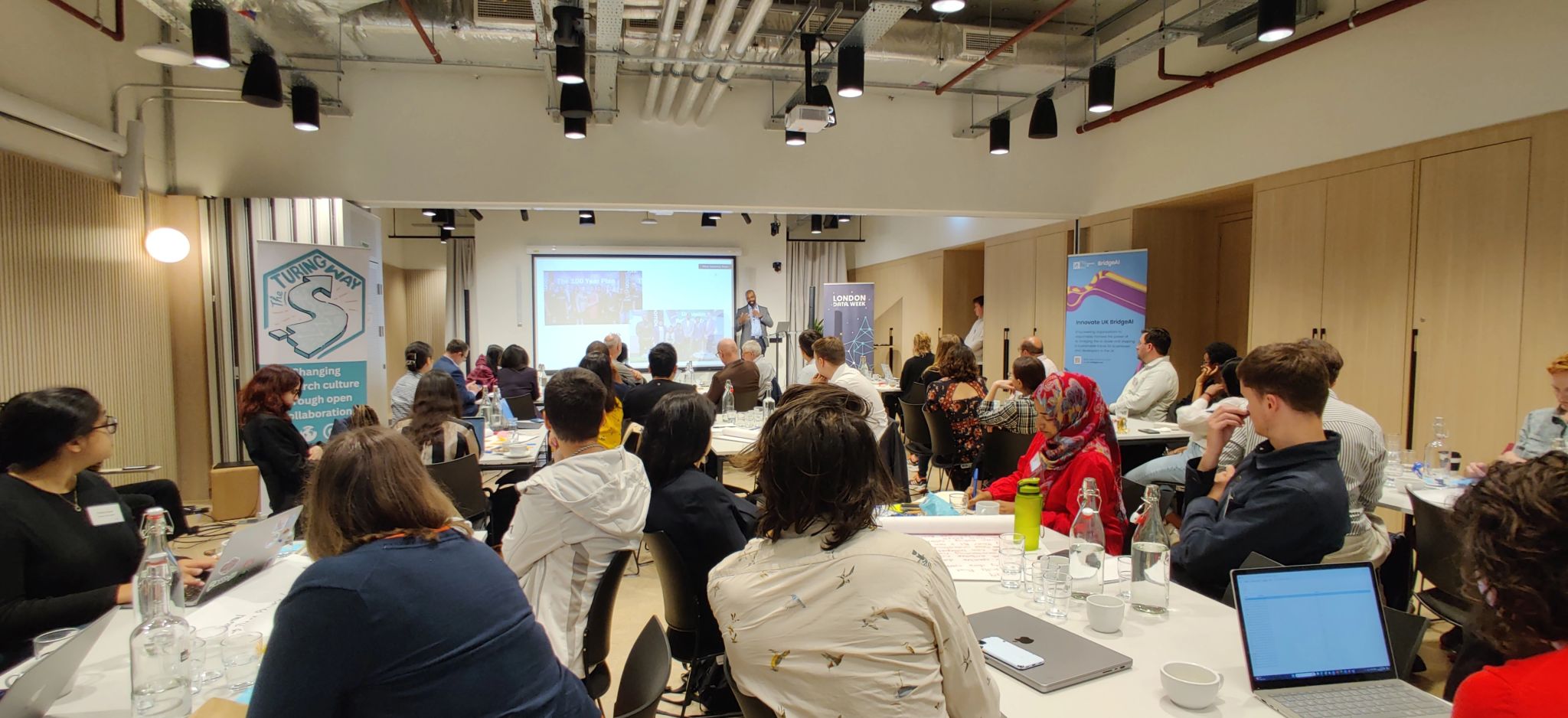
Based on my conversations at the event, I was invited by Sam Nutt from the London Office of Technology & Innovation (LOTI) to speak at a London Data Week event titled ‘Empowering People In Data: Exploring Skills and Building Community’ at the Impact Hub in Euston.
My Presentation: Empowering People in Data
During my presentation, I addressed the integration of data skills in secondary school education through practical, real-world projects such as air pollution studies. These projects significantly enhanced students’ technical portfolios, data application, and soft skills. Additionally, we explored how data bootcamps and initiatives could encourage young talent outside formal education to apply their data skills locally, and how local councils could support these efforts.
Reflection on London Data Week
Data is being produced at an unprecedented rate. The way we analysing, processing, and interpretating data at this current time is both exciting and challenging. It’s crucial to consider data in a holistic format—examining the historical past, present, and future—and to understand how it functions within an ecosystem. Does the data simply confirm what we already know, or does it provide actionable insights for meaningful, tangible actions?
London Data Week highlighted the importance of leveraging data for the greater good, fostering a community of innovation and ethical use. As we move forward, it is essential to continue these conversations and collaborations to unlock the full potential of data in our society.