
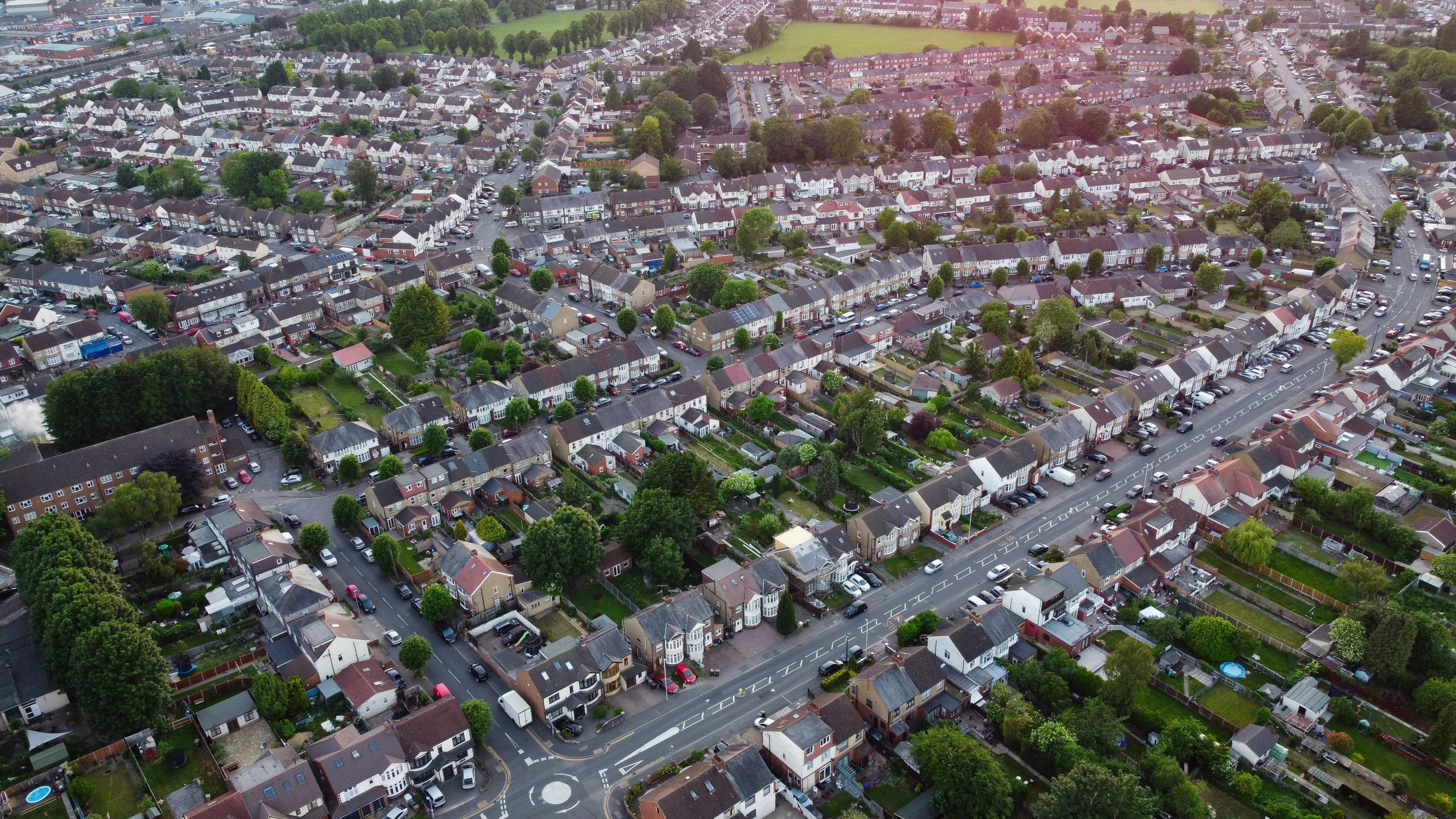
Britain has spent decades discussing how to build more homes. There is another enormous challenge sitting in front of us, how do we make the millions of homes that already exist healthier, warmer, more efficient and easier to maintain?
The latest English Housing Survey found that 1.4 million dwellings in England had significant damp problems in 2024. The problem affected 10 per cent of privately rented homes, compared with 7 per cent of social housing and 4 per cent of owner-occupied properties.
Energy efficiency is improving. More than half of English homes now achieve an energy-efficiency rating between A and C, compared with just over a quarter a decade earlier.
However, that still leaves millions of properties requiring improvement, while Britain’s ageing housing stock creates challenges involving insulation, ventilation, heating, maintenance and energy consumption.
This is normally discussed as a housing-policy problem.
It is also an enormous technology and design problem.
What If We Treated Homes Like Systems?
Modern cars constantly monitor themselves.
Sensors measure tyre pressure, engine temperature, battery condition, fuel consumption and dozens of other variables. When something starts going wrong, the vehicle can warn its owner before the problem becomes catastrophic.
Our homes are considerably less intelligent.
A tenant might discover mould only after it becomes visible on a bedroom wall. A landlord may discover a leaking pipe after damage has already occurred. A homeowner may know their energy bill is high without understanding whether the underlying problem is insulation, ventilation, heating controls, windows or the building fabric.
The opportunity is to give buildings something approaching a nervous system.
Sensors, computer vision, smart meters, artificial intelligence and digital building records could potentially allow homes to communicate their condition before small problems become expensive ones.
Damp Shows Why This Matters
Damp provides a particularly powerful example because the problem is not simply cosmetic.
The English Housing Survey found that 5 per cent of dwellings had significant damp in 2024.
Private renters were particularly exposed, with one in ten privately rented homes affected.
Housing conditions and energy performance are also connected. Earlier English Housing Survey analysis found that homes with poorer energy-efficiency ratings were substantially more likely to experience damp than highly rated homes. Inadequate ventilation was particularly strongly associated with damp problems.
That suggests an opportunity to move housing maintenance from reaction towards prediction.
Instead of waiting for somebody to photograph mould and report it, sensors could monitor humidity, temperature and other environmental conditions continuously.
Software could identify patterns suggesting that condensation or mould risk is increasing and alert the resident or property manager before the damage becomes severe.
The question changes from asking what went wrong to asking what is about to go wrong.
Could Your Phone Become a Housing Surveyor?
Computer vision creates another interesting possibility.
Imagine walking around your home with your smartphone camera.
The application builds a basic digital model of the room while identifying visible signs of deterioration, condensation, damaged seals, ventilation problems or other potential maintenance issues.
Combine those images with information from an Energy Performance Certificate, smart meter, environmental sensors and information about the building’s age and construction type, and the system could begin building a much richer picture of the property’s condition.
It could then recommend further investigation where appropriate.
This distinction matters because a smartphone photograph cannot reliably see through walls or determine every source of heat loss. Thermal imaging may require additional hardware, and diagnosing damp correctly can require professional assessment.
The technology should therefore assist the surveyor rather than pretend the surveyor is unnecessary.
But the smartphone could dramatically improve the first layer of housing intelligence.
AI Could Turn Problems Into Repair Jobs
Finding the problem is only half of the journey.
Imagine that the system identifies evidence of a ventilation problem.
Instead of simply displaying a warning, software could help translate the problem into action.
It could generate an initial description of the work required, identify what type of qualified contractor may be appropriate, provide indicative cost ranges and create a digital repair request.
For professional landlords and housing associations managing thousands of properties, this becomes particularly interesting.
A maintenance team could potentially see which properties require immediate intervention, which repairs are preventative and which buildings are repeatedly generating the same problems.
AI could help prioritise maintenance rather than simply process complaints.
That could change the economics of property management.
Fixing a small problem early is often considerably cheaper than repairing the consequences later.
Every Home Could Have a Digital Maintenance History
Buying a second-hand car usually comes with an obvious question about its service history.
Property is strangely different.
A house costing hundreds of thousands of pounds may have been modified repeatedly over decades without a complete, accessible record showing what was changed, when it was changed, who completed the work and what materials were used.
Imagine every property having a secure digital logbook.
Boiler installations, insulation upgrades, window replacements, ventilation improvements, electrical inspections, damp remediation and other significant work could become part of a persistent property record.
That record could potentially follow the building rather than disappearing whenever the homeowner, tenant, landlord or managing agent changes.
This could create value for residents, landlords, buyers, mortgage lenders, insurers and contractors.
Blockchain could potentially contribute to making parts of that history tamper-evident, although it is not essential. A well-governed conventional database could solve much of the same problem.
The innovation is the trustworthy property history, not the blockchain itself.
What If Every Home Had a Health Score?
The consumer interface could be considerably simpler than the technology underneath it.
Imagine opening an application and seeing a Home Health Score of 74 out of 100.
The application might explain that energy efficiency is improving, humidity has been consistently high in one bedroom, ventilation requires attention and the boiler appears to be consuming more energy than expected.
Instead of presenting the homeowner with building-science terminology, the system translates the information into understandable actions.
The score could improve as problems are resolved.
Housing associations or councils could potentially create incentive schemes for appropriate improvements. Insurers might eventually reward verified preventative maintenance. Landlords could demonstrate that problems had been resolved. Homebuyers could receive a much richer picture of the property they were considering purchasing.
Gamification should be handled carefully because a tenant should not be penalised for structural problems they do not control.
However, making preventative maintenance understandable and rewarding could encourage earlier action where residents genuinely have the ability to make improvements.
The Real Opportunity Is Integration
Many of the individual technologies already exist.
Smart thermostats exist.
Humidity sensors exist.
Thermal cameras exist.
Energy Performance Certificates exist.
Smart meters exist.
Property-management platforms exist.
Computer vision exists.
Artificial intelligence exists.
The innovation opportunity lies in connecting them.
A property-health platform could potentially combine several layers of information.
| Technology | Potential Role |
|---|---|
| Environmental sensors | Monitor humidity, temperature, air quality and conditions associated with condensation and mould risk. |
| Computer vision | Identify visible deterioration and help residents document property conditions consistently. |
| Thermal imaging | Help locate potential insulation gaps and abnormal heat loss. |
| Smart-meter data | Reveal patterns in household energy consumption. |
| AI diagnostics | Combine multiple signals to identify emerging maintenance risks and prioritise investigation. |
| Digital property logbooks | Preserve a history of repairs, inspections and upgrades. |
| Repair orchestration | Translate identified problems into jobs, indicative costs and appropriate contractors. |
| Predictive maintenance | Identify components or properties requiring attention before failure occurs. |
| Home Health Score | Translate complex building information into something residents can understand and act upon. |
The opportunity is therefore bigger than creating another smart-home gadget.
It is creating an operating system for the home.
Modern Construction Creates Another Opportunity
Britain also needs more homes.
Technology can contribute there too.
Modern methods of construction, off-site manufacturing, robotics, digital twins and advanced materials could potentially improve productivity and consistency while reducing some forms of waste.
However, technology should not be treated as a magic solution to Britain’s housing shortage.
Planning, land availability, infrastructure, finance, construction skills and market conditions all affect how many homes are eventually delivered.
A robot can make part of the construction process more efficient.
It cannot grant planning permission.
The more credible technology proposition is therefore to identify parts of the housing lifecycle where information, automation and better design can remove genuine friction.
That includes both constructing new homes and improving existing ones.
Britain’s Existing Homes May Be the Bigger Technology Market
New-build homes attract considerable attention because they provide opportunities to install modern technology from the beginning.
The existing housing stock presents a different challenge.
Older properties were built using different materials, construction techniques and heating systems. Retrofitting them can therefore be considerably more complicated than designing efficiency into a new building.
That complexity could itself create a technology market.
Before somebody can improve a property, they need to understand it.
What type of walls does it have? Where is heat escaping? What ventilation exists? Which improvements are technically appropriate? What should be done first? How much might it cost? Which contractor should undertake the work?
Digital assessment, property modelling and retrofit-planning tools could help answer those questions at scale.
The opportunity is not simply installing insulation.
It is building the intelligence layer that determines what millions of different homes actually need.
The UKBT Institute Opportunity
This is precisely the type of challenge that requires people from different disciplines.
A housing specialist understands buildings.
A data scientist can identify patterns across thousands of properties.
An AI engineer can build predictive systems.
An architect understands how people interact with physical space.
An IoT engineer understands sensors.
A behavioural scientist can investigate why residents do or do not act on information.
A UX designer can translate complicated building data into something understandable.
A community practitioner can identify whether the proposed solution actually works for the people expected to use it.
Housing innovation should therefore not be confined to construction companies or property developers.
Some of the most interesting solutions could emerge when technologists, designers, researchers, housing professionals and communities work on the same problem.
That interdisciplinary approach is central to what the UKBT Institute is trying to create.
We want innovators to look at major challenges facing Britain and ask not simply what technology can be built, but what combination of technology, design, research and lived experience could make the system work better.
The Bigger Picture
Britain’s housing challenge is usually measured by how many homes we need to build.
Perhaps we should also measure how intelligently we look after the homes we already have.
Millions of properties generate information every day through temperature, humidity, energy consumption, repairs and the experiences of the people living inside them. Much of that information remains disconnected.
Connecting it could create an entirely new layer of housing infrastructure.
A home could eventually identify that something is going wrong, explain the likely problem, recommend an appropriate intervention, generate the repair workflow and preserve evidence that the work was completed.
That would change our relationship with housing from reactive maintenance towards preventative care.
The most interesting smart home of the future may therefore not be the house that turns the lights on when you enter the room. It may be the house capable of telling you that something is going wrong before you can see it.
We already monitor the health of our bodies, cars and computers. Perhaps it is time we gave our homes the ability to tell us when they need help too.