
What If Replacing Animal Testing Is Not Just More Ethical, But Better Science?
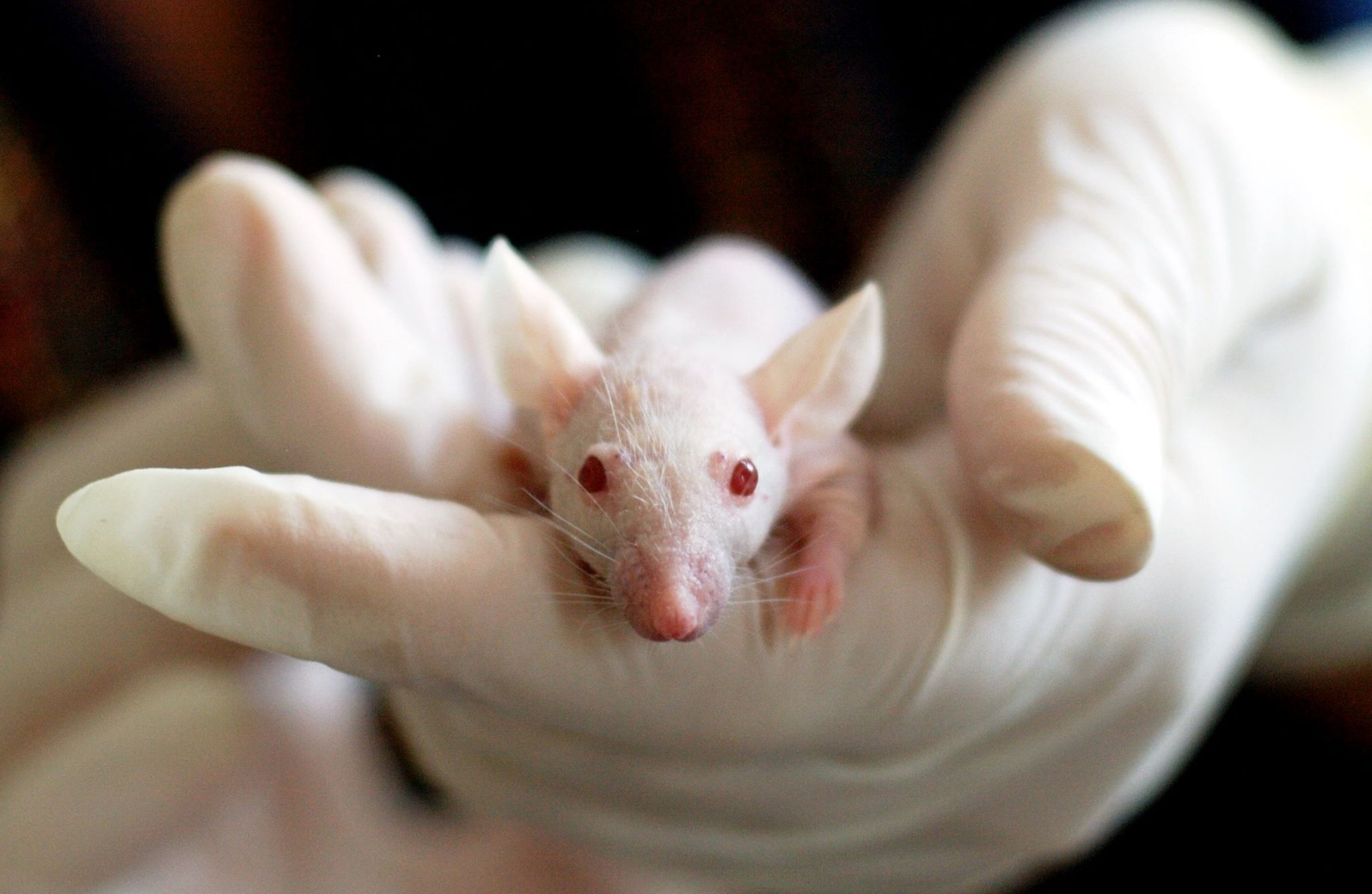
For decades, the debate around animal testing has largely been framed as an ethical dilemma. Society wants new medicines to be safe, but achieving that safety has historically involved experiments on millions of animals. The uncomfortable compromise has been justified partly by the assumption that animal testing remains scientifically necessary.
That assumption is now being challenged by a new generation of technologies designed around human biology itself.
Scientists can grow miniature three-dimensional tissues from human cells, create organoids that reproduce important features of organs and build “organs-on-chips” in which living human cells experience some of the physical and chemical conditions found inside the body. Artificial intelligence and computational models can then help researchers analyse the enormous quantities of biological data these systems produce.
The significance of these technologies is not simply that they could reduce the number of animals used in laboratories. In some applications, human-relevant models are beginning to provide information that conventional animal models struggle to predict.
That creates a profound question for modern biomedical science. If a non-animal method can eventually provide better information about what will happen inside a human being, does continuing to use the animal model remain scientifically justified?
The Problem With Using One Species to Predict Another
Animal testing has contributed enormously to biomedical research, and it would be misleading to suggest that it has provided no scientific value. The deeper problem is that a mouse, dog, monkey or rat is not a miniature human being.
Different species metabolise chemicals differently, develop diseases differently and can respond differently to the same medicine. A compound that appears safe in an animal may therefore produce toxicity in humans, while potentially useful compounds can also be discarded because of effects in animals that may not translate to people.
This translation problem has contributed to the extraordinarily high failure rate encountered during drug development. Frequently cited estimates suggest that around 90 per cent of drug candidates entering clinical development ultimately fail, although those failures occur for many reasons, including insufficient efficacy, safety problems, commercial decisions and difficulties translating preclinical biology into humans.
The scientific challenge is therefore not simply to eliminate animals. It is to develop experimental systems that predict human biology more accurately.
A Human Liver on a Chip
One of the most striking examples comes from research using a human Liver-Chip developed by Emulate.
An organ-on-chip is not literally a miniature complete organ. It is a small engineered device containing living human cells arranged so that researchers can reproduce important aspects of the physical environment those cells experience inside the body.
Researchers evaluated 780 Liver-Chips against 27 drugs with known outcomes in humans. The system achieved 87 per cent sensitivity in identifying drugs capable of causing liver injury while achieving 100 per cent specificity for the non-toxic drugs in the test set.
The comparison becomes particularly interesting because the toxic compounds examined had previously been considered safe based on animal testing before subsequently proving toxic in patients.
The experiment does not establish that an organ-on-chip is superior to every animal experiment or that animal testing can immediately be abandoned across drug development. It demonstrates something more specific and scientifically important: for this particular problem, a model constructed from human biology identified risks that traditional preclinical approaches had failed to predict.
Why Human Cells Can Change the Question
Traditional animal research essentially asks whether scientists can learn enough from another species to predict what will happen in humans.
Human-relevant technologies begin from a different direction. They attempt to reproduce particular aspects of human biology directly.
Organoids can be grown from human stem cells into three-dimensional structures that reproduce selected characteristics of organs including the brain, liver, intestine and kidney. Organ-on-chip systems can add other biological features, including fluid flow, mechanical forces and interactions between different cell types.
Brain organoids are particularly interesting because aspects of human brain development and neurological toxicity can be difficult to reproduce using conventional laboratory models. Recent research has shown that three-dimensional human neural models can reveal developmental and cellular effects that simpler two-dimensional cultures can miss.
None of these systems reproduces an entire human body. That limitation matters. A liver chip cannot perfectly recreate every interaction between the liver, immune system, kidneys, nervous system and metabolism.
The emerging possibility is therefore not one magical replacement for the laboratory animal. It is a collection of human-relevant technologies that can increasingly be combined.
Where Artificial Intelligence Fits In
Artificial intelligence adds another layer to this transition.
Modern biomedical research produces enormous datasets containing information about genes, proteins, cells, chemicals, diseases and previous experiments. Computational models can identify relationships within these datasets and help scientists predict how compounds may behave before conducting additional physical experiments.
AI can also be combined with organoids, organ-on-chip systems, human tissue data and other experimental approaches.
The future of drug testing may therefore look less like replacing a mouse with a single technological alternative and more like creating an interconnected system of evidence based increasingly on human biology.
The UK government’s own strategy recognises this possibility. It specifically identifies AI, organoids, three-dimensional cellular models, genomics and other human-relevant technologies as developments that could accelerate the replacement of animals in science.
The Regulators Are Beginning to Move
This is what makes the issue particularly important now. The scientific development is increasingly being accompanied by policy and regulatory change.
In November 2025, the UK government published a national strategy intended to accelerate the replacement of animals in scientific research. Its long-term ambition is a research system in which animals are eliminated from science in all but exceptional circumstances, while recognising that some animal research will continue until sufficiently reliable alternatives exist.
The strategy includes plans to increase investment in alternative methods, strengthen validation, improve regulatory acceptance and establish a UK Centre for the Validation of Alternative Methods.
The government has subsequently backed that ambition with additional investment. In August 2026, it announced a £22 million package that included a £20 million centre focused on growing miniature organs from human tissue alongside projects involving human cellular models and AI-based approaches to predicting how medicines behave inside the body.
The European Union is moving in a similar direction. In June 2026, the European Commission adopted its roadmap towards phasing out animal testing for chemical safety assessments, setting out more than 30 recommendations designed to accelerate the transition towards alternative approaches.
This does not mean regulators have declared animal testing obsolete. It means governments are increasingly constructing the scientific and regulatory infrastructure needed for validated alternatives to replace particular animal tests.
The Ethical Question Is Changing
For many years, the ethical argument around animal research has involved balancing animal welfare against potential benefits to human health.
Human-relevant technologies introduce another dimension to that calculation.
If an animal experiment remains the best available method for answering an important safety question, the ethical debate remains difficult. But if a validated human-based method can answer the same question equally well or better, the justification for using the animal becomes considerably weaker.
The issue then stops being simply whether society is willing to use animals to advance medicine.
It becomes whether society should continue using animals when scientifically superior alternatives exist.
That is a very different ethical proposition.
We Should Not Get Ahead of the Science
There is still good reason for caution. Organoids are simplified biological systems. Organ-on-chip technologies cannot yet reproduce every interaction occurring across an entire human body. Computational models are only as reliable as their data, assumptions and validation allow them to be.
The UK government itself acknowledges that there are currently areas, including aspects of pharmacokinetics, where alternative methods cannot yet fully reproduce the information obtained from living organisms.
The transition therefore cannot simply be driven by the desire to eliminate animal experiments as quickly as possible. Medicines and chemicals still need rigorous safety assessment.
The stronger principle is that animal experiments should not survive simply because they are familiar.
When a validated alternative produces equivalent or better evidence, regulation should allow science to move with the evidence.
What Does the Transition Look Like?
| Approach | What It Can Contribute | Current Limitation |
|---|---|---|
| Organs-on-chips | Recreate selected features of human organ biology using living human cells. | Cannot yet reproduce every whole-body interaction. |
| Human organoids | Model aspects of human tissue development, disease and toxicity in three dimensions. | Simplified compared with complete human organs. |
| AI and computational models | Analyse large datasets and predict biological or chemical behaviour. | Performance depends heavily on data quality and validation. |
| Human tissue and cellular models | Measure biological responses directly in human-derived material. | Individual models reproduce only parts of human physiology. |
| Animal models | Allow researchers to study interactions across a complete living organism. | Species differences can limit translation to human biology. |
The most plausible future is therefore not an overnight abolition of every animal experiment. It is a progressive shift in which scientists increasingly ask whether an animal is actually the best model for the scientific question being investigated.
The Bigger Picture
Something important is happening at the intersection of ethics, technology and regulation.
For decades, the argument for reducing animal testing was driven primarily by animal welfare. That argument remains powerful, but it is increasingly being joined by another proposition: sometimes the most ethical approach may also be the more scientifically relevant one.
The UK’s strategy and the European Commission’s roadmap suggest that policymakers increasingly recognise this opportunity. The technology is developing, investment is increasing and regulators are beginning to create pathways through which validated alternatives can be adopted.
The post-animal-testing era has not yet arrived, and claiming otherwise would run ahead of the evidence. Animal research continues to play an important role in areas where reliable replacements do not yet exist.
But the direction of travel is becoming much clearer.
The question facing pharmaceutical companies, universities and research institutions is therefore no longer simply whether they support reducing animal testing in principle. They increasingly need to understand which human-relevant technologies are becoming scientifically credible, where regulators will accept them and how quickly their own research practices need to change.
Perhaps the most important breakthrough will not be discovering how to conduct science without animals. It will be reaching the point where, for some questions, using the animal is no longer the best science.